
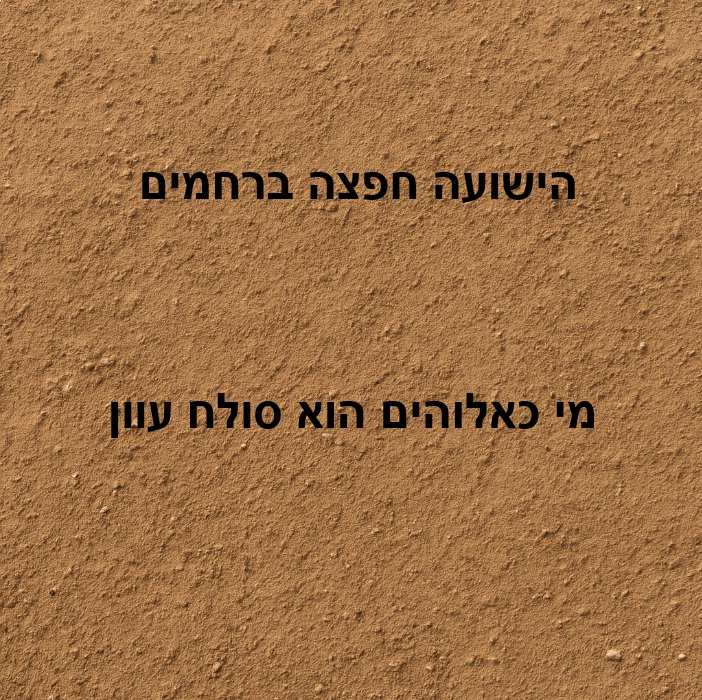
Introduction The account of the woman caught in adultery (John 8:1–11) remains one of the most theologically rich and debated moments in the Gospels. At its center lies a question that has stirred imaginations for centuries: What did Jesus write on the ground? While many have speculated, a closer reading of the text—especially through the lens of biblical context and prophetic fulfillment—suggests a deeper truth: what mattered most was not what they saw, but what they heard. This article will explore the three most common theories and show why they likely miss the point, then present a compelling interpretation rooted in Scripture and the nature of Yeshua Himself.
What People Commonly Believe Jesus Wrote — And Why It’s Unlikely
- Their Names (linked to Jeremiah 17:13) – Many believe Jesus wrote the names of the accusers, referencing the verse: “Those who turn away from You shall be written in the earth.” While this interpretation has prophetic flavor, Jeremiah 17:13 does not say their names will be written, only that those who turn away will be “written in the earth”—likely a metaphor for being identified with shame, not a literal name-writing event. Additionally, in John 8:7, the accusers continue pressing Jesus even after He stoops and writes. If He had written their actual names, their reaction likely would’ve been immediate, defensive, or even hostile—not inquisitive.
- Their Private Sins – Another theory claims Jesus exposed their hypocrisy by writing specific sins in the dirt. Again, this doesn’t align with their response. If He had publicly listed their sins, it would have resulted in anger, not quiet shame. Throughout the Gospels, when Jesus confronted the Pharisees directly about breaking commandments—such as in Mark 7, when He accused them of nullifying the command to honor father and mother—they reacted with hostility, not humility. That He wrote something which allowed them to walk away quietly and one by one suggests He offered mercy, not exposure.
- The Ten Commandments – Some suggest Jesus wrote the Ten Commandments in the dirt, perhaps to remind the accusers of the very Law they claimed to uphold. While symbolic, this theory also fails the test of context. Jesus had confronted religious leaders before with the commandments, and it often led to rage or accusation (e.g., healing on the Sabbath in John 5:18, or rebukes in Matthew 23). If He had written the Ten Commandments as a moral confrontation, they likely would’ve reacted similarly. But instead, they continued questioning Him, which means the first writing didn’t offend or shock them.
In all three cases, the reaction we’d expect does not match the one recorded in Scripture. The writing didn’t stir rage, fear, or argument—it stirred internal conviction. And that conviction came not from what they saw, but from what they heard.
“They Which Heard It…” — The Real Turning Point
John 8:9 says:
“And they which heard it, being convicted by their own conscience, went out one by one…”
Not “they which saw it.” The Holy Spirit, through John, emphasizes what they heard—not what they read. What did they hear?
“Let him who is without sin among you cast the first stone.” (John 8:7)
It wasn’t what Jesus wrote in the dirt that struck them—it was what the Word spoke. This aligns with Hebrews 4:12: “For the Word of God is living and active… discerning the thoughts and intentions of the heart.” And Jesus, the Word made flesh (John 1:14), pierced them not with accusation, but with truth spoken gently, yet firmly.
Why What He Wrote Was Likely Gentle and Merciful
Jesus stooped and wrote twice (John 8:6, 8), and this act is filled with symbolism. But the key is found in how the accusers respond:
- They don’t get enraged.
- They don’t argue back.
- They don’t accuse Jesus of slander or blasphemy.
They leave one by one, beginning with the eldest. That’s not the reaction of people who have just been exposed or embarrassed. It’s the response of people whose consciences were stirred, not their pride.
This suggests what Jesus wrote was Scripture, but not confrontational—more likely something merciful or reflective. And we know from the Gospels that Jesus always quoted Scripture:
- In temptation: “It is written…” (Deut. 8:3)
- In rebuke: “Have you not read…?” (Gen., Psalms, and Prophets)
- In prophecy: “That the Scripture might be fulfilled…” (Psalms, Isaiah, Zechariah)
He quoted freely from Torah, Prophets, and Psalms—but it was often the Prophets and Psalms that reflected God’s mercy and love most clearly.
A Better Theory: He Wrote Mercy From the Prophets — And Quoted Himself
What if Jesus wasn’t just quoting Scripture—but quoting Himself? After all, He is the Word made flesh (John 1:14). The Spirit of Christ spoke through the prophets (1 Peter 1:11), and Jesus frequently pointed back to words originally spoken through them. What if His two writings in the dirt came from two prophets whose very names pointed to who He is?
First Writing: Hosea 6:6 — From “Salvation” Himself
“For I desired mercy, and not sacrifice; and the knowledge of God more than burnt offerings.”
- Spoken through Hosea, whose name means “Salvation”
- Quoted by Jesus Himself in Matthew 9:13 and 12:7 to rebuke the same kind of merciless legalism
In writing this first, He may have been gently confronting their approach: You bring the Law to condemn—but I am the One who gave it, and I desire mercy.
Second Writing: Micah 7:18 — From “Who Is Like God?”
“Who is a God like unto thee, that pardoneth iniquity, and passeth by the transgression of the remnant of his heritage? he retaineth not his anger for ever, because he delighteth in mercy.”
- Spoken through Micah, whose name means “Who is like YHWH?”
- A declaration of God’s uniqueness in showing mercy
With this second writing, Jesus may have pointed to Himself again—Who is like God? You’re standing before Him. And He delights in mercy.
So in this view:
- First writing (Hosea) = “Salvation desires mercy”
- Second writing (Micah) = “Who is like God? He pardons iniquity”
Jesus isn’t just quoting Scripture. He’s revealing His identity through what He wrote—as the very One who once spoke those words through the prophets.
What About Jeremiah 17:13?
Many argue John 8 is a literal fulfillment of Jeremiah 17:13:
“O Lord, the hope of Israel, all who forsake you shall be ashamed; those who turn away from you shall be written in the earth, because they have forsaken the Lord, the fountain of living waters.”
It’s a strong connection—but let’s be precise. The verse does not say names will be written. It says “those who turn away… shall be written in the earth.” That’s symbolic language, not a literal instruction for writing names in dirt. More importantly, the verb is passive (“shall be written”), implying divine judgment or marking—not a personal act of writing.
In John 8:
- Jesus is not judging the Pharisees directly.
- They are not enraged, but convicted.
- They depart quietly—not like people who have just been publicly marked.
So while Jesus may be symbolically echoing Jeremiah 17:13, He is not fulfilling it literally by writing their names. Instead, He fulfills the spirit of the verse by showing that those who reject mercy are already marked—not by ink, but by their own conscience.
Conclusion: Mercy Wrote in the Dirt
Jesus didn’t expose them—He invited them. He didn’t accuse—He contrasted. He didn’t write names or sins—He wrote Scripture, soft and merciful, in the dirt.
He may have written the very words He once spoke through the prophets Hosea and Micah—words of mercy, restoration, and divine compassion. In doing so, He pointed not only to the Word, but to Himself.
In a world where pride demands justice, Jesus stooped low and offered grace and truth.
“Though we may not know exactly what Jesus wrote, we can be confident it was merciful—because He is full of grace and truth. And that day, the Word written in dirt, which man came from, and the Word spoken in the air, which man breathes, was a creation of a new heart.”
“And the Word was made flesh, and dwelt among us… full of grace and truth.” (John 1:14)
 asathief.com