
When the Apostle Paul wrote, “I have fought the good fight, I have finished the race, I have kept the faith” (2 Timothy 4:7), he was not merely reflecting on his own life — he was also making a profound statement about what true victory looks like in contrast to the corrupt and superficial triumphs of his time.
What many people don’t realize is that Paul was writing under the reign of Emperor Nero, a man notorious for pretending to win races he never truly completed. Once we understand this historical background, Paul’s words take on a whole new level of meaning.
Nero’s Fake Victories: History Records the Scandal
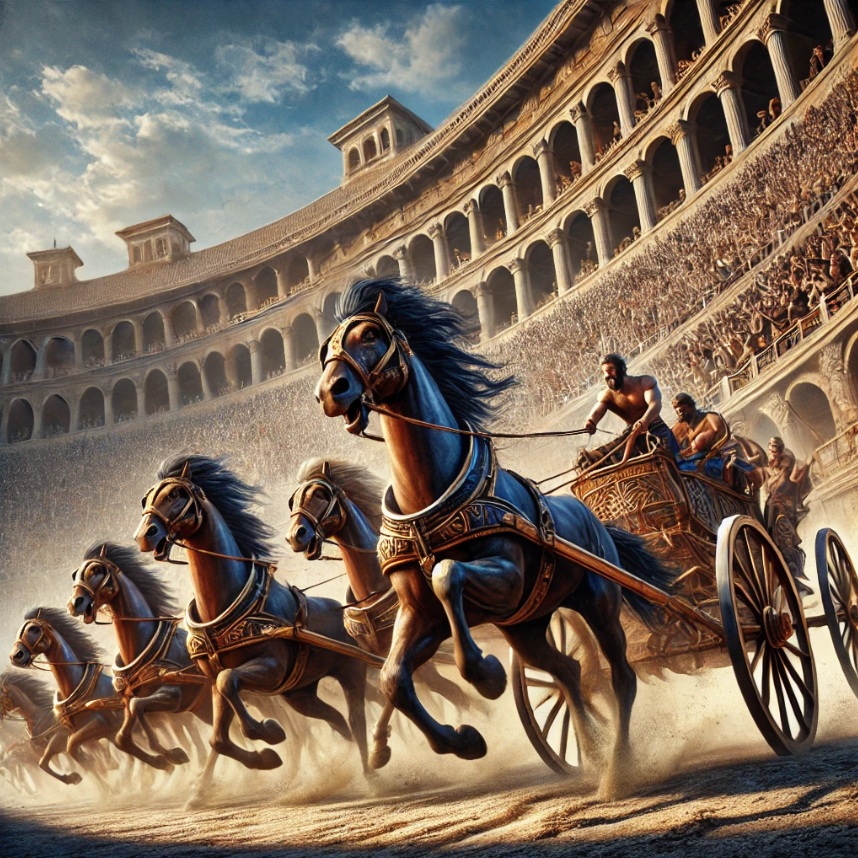
Nero, emperor of Rome from 54 to 68 A.D., was obsessed with his public image and desperate to be seen as a champion and hero. His vanity led him to compete in public games, including chariot races and musical contests. But unlike genuine competitors, Nero manipulated the outcomes:
- He added more horses to his chariot than was allowed, to give himself an advantage.
- At the Olympic Games in Greece, Nero fell out of his chariot, failed to finish the race, but still forced the judges to declare him the winner — out of fear and political pressure.
- Suetonius, a Roman historian, records how Nero would declare victory even when no one else was competing!
These false victories were widely known and mocked behind closed doors, though few dared to speak out publicly.
Paul’s Race: A Different Standard of Victory
In sharp contrast to Nero’s empty victories, Paul’s life was one of genuine struggle, perseverance, and faithfulness to God, even unto death. When Paul wrote about finishing the race, he wasn’t boasting of personal greatness — he was proclaiming the victory of remaining faithful to Christ, no matter the cost:
“I have fought the good fight, I have finished the race, I have kept the faith.” (2 Timothy 4:7)
This was not a race for public applause, but a race for a heavenly crown:
“Now there is in store for me the crown of righteousness, which the Lord, the righteous Judge, will award to me on that day—and not only to me, but also to all who have longed for his appearing.” (2 Timothy 4:8)
While Nero demanded a crown of olive leaves for a race he didn’t finish, Paul looked forward to a crown of righteousness — awarded by God Himself, the true and righteous Judge.
Was Paul Subtly Mocking Nero?
Though Paul never names Nero directly in these verses, the historical context strongly suggests that his words were a direct contrast to Nero’s behavior. Paul was known for using culturally relevant metaphors to make his point, and chariot racing and public games were central to Roman society.
Consider this:
- Paul was imprisoned in Rome, awaiting a death sentence likely ordered by Nero himself.
- Nero’s fraudulent victories were public knowledge.
- By speaking of finishing the race and receiving a true crown, Paul was exposing the emperor’s hypocrisy without needing to say his name.
Paul’s message was clear:
True victory comes from faithfulness to God, not from public recognition or manipulated success.
A Message for Today: What Race Are We Running?
Paul’s words challenge us to examine our own pursuit of victory. In a world that often values image over integrity, attention over truth, and success at any cost, Paul reminds us that:
- Finishing the race matters more than starting it with a show.
- Faithfulness to God is greater than public approval.
- True crowns come from God, not from the applause of men.
Just as Nero’s fake victories have been exposed by history, false appearances of faith will one day be revealed. God is looking for those who will run the race with endurance, even when no one is watching, and finish well.
“Let us run with endurance the race that is set before us, looking unto Jesus, the author and finisher of our faith.” (Hebrews 12:1-2)
Final Thoughts
Paul and Nero both “ran” — but only one truly finished the race.
- Nero ran for glory, but fell and was crowned anyway — by fearful men.
- Paul ran for Christ, endured persecution, and was promised a crown by the King of Kings.
In the end, Paul’s legacy of faithfulness stands, while Nero’s name is remembered in shame.
So which race are we running? Whose crown are we seeking?
 asathief.com