
Introduction
The genealogy from Adam to Noah holds profound significance in Islam, Judaism, and Christianity. These names, often seen as mere historical markers, reveal a deeper narrative when their meanings are connected. Across these faiths, they provide a glimpse into God’s plan for humanity, pointing toward a message of redemption. By exploring the meanings of these names, we invite Muslims, Jews, and Christians to consider the unified story they tell—a story that finds its fulfillment in Yeshua (Jesus Christ).
The Genealogy and the Name Meanings
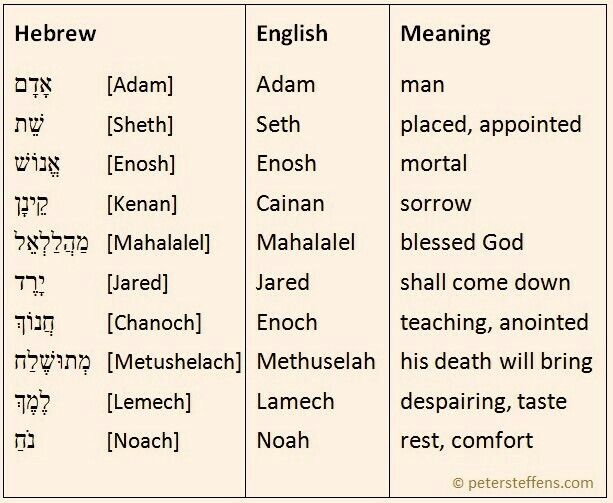
In Genesis 5, the names of Adam’s descendants are recorded. When translated, their meanings form a powerful narrative:
- Adam (Man)
- In all three faiths, Adam is the first human, created by God to reflect His image. His name simply means “man,” representing humanity as a whole.
- Seth (Appointed)
- Seth, born after Abel’s death, is described as the one God appointed to carry forward the righteous lineage. This aligns with the idea of divine purpose across all three faiths.
- Enosh (Mortal)
- Enosh’s name reflects the frailty of human life—a reminder of humanity’s need for God’s guidance and mercy.
- Kenan (Sorrow)
- Kenan’s name carries the weight of sorrow, pointing to the burdens of sin and separation from God.
- Mahalalel (Blessed God)
- This name introduces hope: the “Blessed God” is the one who provides salvation and guidance.
- Jared (Shall Come Down)
- Jared’s name foretells divine intervention, the idea of God coming down to interact with and redeem His creation.
- Enoch (Dedicated)
- Enoch’s life, marked by his close walk with God, reflects dedication and intimacy with the Creator—a goal for all believers.
- Methuselah (His Death Shall Bring)
- Methuselah’s name suggests a prophetic timeline: his death coincides with the flood, symbolizing both judgment and a chance for renewal.
- Lamech (Despair)
- Lamech’s name reflects humanity’s suffering under sin but also introduces the hope of comfort.
- Noah (Rest, Comfort)
- Noah’s name signifies rest and relief, as he becomes the vessel through which God saves the righteous from destruction.
The Significance of Ten
The genealogy from Adam to Noah includes ten men, a number that carries great symbolic meaning across the Scriptures and faiths:
- Just as there are Ten Commandments, representing the fullness of God’s moral law, there are ten generations leading to Noah, each pointing to a greater truth.
- Humanity has fallen short of the Ten Commandments, unable to live up to God’s perfect standard. Yet, the names of these ten men tell the story of the one who would fulfill that standard:
“Man is appointed mortal sorrow; the Blessed God shall come down, teaching that His death shall bring the despairing rest.”
These ten names reveal God’s plan for redemption. Where humanity failed to uphold the Ten Commandments, the one foretold by these ten names—Yeshua (Jesus)—fulfilled them completely. He became the rest and comfort for all who believe, bringing reconciliation with God.
The Need for Atonement
Central to understanding the story told by these names is the concept of atonement for sin, a theme deeply embedded in all three faiths:
- In Judaism: The Torah emphasizes the necessity of a sacrifice for atonement. Leviticus 17:11 states, “For the life of the flesh is in the blood, and I have given it for you on the altar to make atonement for your souls, for it is the blood that makes atonement by the life.” Without the shedding of blood, there could be no forgiveness of sin. However, the animal sacrifices of the past were temporary and pointed to a greater, perfect sacrifice.
- In Islam: While the Qur’an does not explicitly endorse the idea of blood atonement, it emphasizes God’s mercy and forgiveness. Prophets, including Noah (Nuh), called for repentance and submission to God. The sacrificial system in earlier times is acknowledged, but its ultimate significance is seen in the Christian view of the Lamb of God.
- In Christianity: Yeshua (Jesus) is revealed as the unblemished Lamb, the ultimate and final sacrifice for the atonement of sins. John 1:29 declares, “Behold, the Lamb of God, who takes away the sin of the world!” His death on the cross was not an act of human pride or effort but an act of divine humility and love. By His sacrifice, He fulfilled the requirement for atonement once and for all, providing a way for humanity to be reconciled with God.
Yeshua: The Way to the Father
Yeshua’s atoning sacrifice is central to understanding why He is the only way to the Father. In John 14:6, He declares, “I am the way, and the truth, and the life. No one comes to the Father except through me.” This is not a statement of exclusivity born from pride, but of humility and divine necessity. Without the shedding of His blood, humanity’s sins could not be atoned for. Yeshua fulfilled the commandments and sacrificial system, making a way for everyone—Jew, Muslim, and Christian—to be reconciled to God.
Bridging the Faiths
For Muslims
In Islam, Noah (Nuh) is a prophet who calls people to repentance and becomes a sign of salvation through obedience to God. The Qur’an emphasizes God’s mercy and guidance, aligning with the idea of a “Blessed God” who “shall come down.” Muslims are encouraged to explore how this genealogy foreshadows the ultimate mercy shown in Yeshua, the one who brings rest to humanity.
For Jews
In Judaism, the names reflect key aspects of human history: creation, sin, divine judgment, and hope for renewal. The sacrificial system, central to atonement in Jewish tradition, finds its ultimate fulfillment in Yeshua, the Messiah. His sacrifice provides the final atonement for sin, bringing comfort and rest to all who believe.
For Christians
For Christians, the genealogy is a clear foreshadowing of the Gospel. Each name highlights a step in God’s redemptive plan, culminating in the work of Jesus Christ. This genealogy can serve as a bridge to dialogue with Muslims and Jews, showing how God’s plan is consistent and unified across the Scriptures.
Conclusion: Becoming One in Christ
The genealogy from Adam to Noah is more than a list of names; it is a divine narrative that speaks to all humanity. These ten names tell the story of humanity’s failure and God’s plan for redemption. They reflect how humanity, bound by sin and unable to fulfill the Ten Commandments, finds rest and renewal through Yeshua, who perfectly fulfilled the law.
Without the atoning sacrifice of the unblemished Lamb, there would be no forgiveness of sin. Yeshua’s selfless act of love bridges the gap between God and humanity, offering salvation to all who believe.
Muslims, Jews, and Christians are invited to consider this narrative and reflect on its implications. Through this shared story, we find common ground and the potential for unity in the one who brings rest and comfort to all—Yeshua, the Messiah.
May this exploration inspire dialogue, reflection, and a deeper understanding of the God who calls us all to Himself.
 asathief.com