
As the holiday season unfolds, many people gather to celebrate Christmas as the birth of Jesus Christ. While the exact date of His birth is traditionally celebrated on December 25th, there is compelling evidence in Scripture that suggests His birth might have occurred during the Feast of Tabernacles, a significant event in the Jewish calendar. Let’s explore this possibility and reflect on the deeper meaning of His birth.
A Birth During the Feast of Tabernacles?
The Gospel of Luke tells us that Mary and Joseph traveled to Bethlehem for a census, and there was no room at the inns (Luke 2:7). This detail aligns with the idea that the city was bustling with pilgrims who had journeyed to Jerusalem for the Feast of Tabernacles, one of the three pilgrimage feasts commanded in the Torah (Leviticus 23:33-43). This feast typically occurs in late September or early October, making it a strong contender for the time of Jesus’ birth.
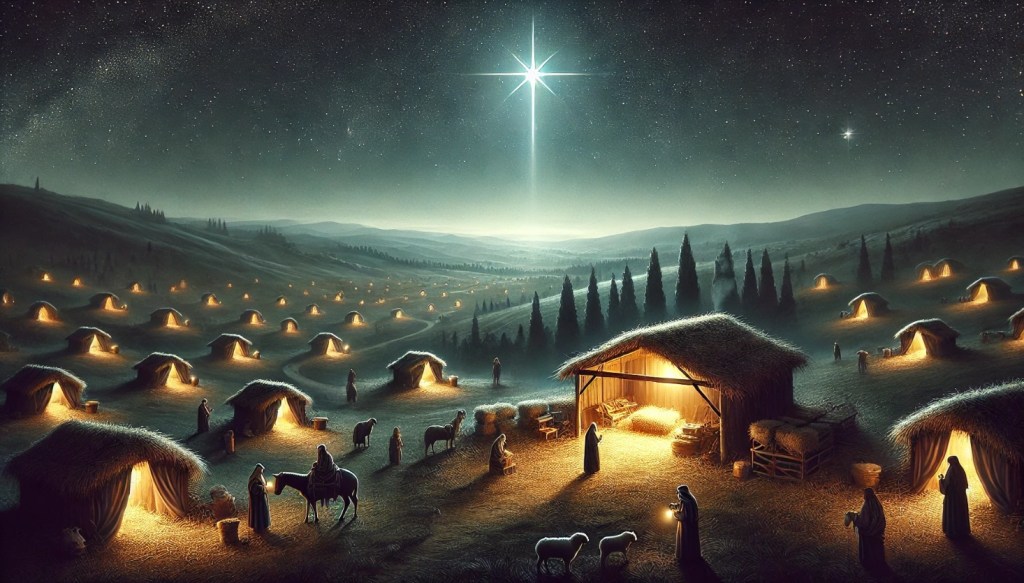
The Feast of Tabernacles, or Sukkot, is rich in symbolism that points to Jesus. This feast celebrates God dwelling among His people, and what better way to fulfill this than through the birth of Immanuel, meaning “God with us” (Matthew 1:23)? Additionally, during Sukkot, families build temporary shelters or booths, called sukkahs, to commemorate their ancestors’ time in the wilderness, living under God’s provision. How fitting it is to think of Jesus being born in a humble stable, surrounded by animals, mirroring this theme of simplicity and divine provision.
The Inn Was Full
The overbooked inns also point to the possibility of the Feast of Tabernacles. This feast would have drawn countless pilgrims to the area, crowding the small town of Bethlehem, located near Jerusalem. Pilgrims typically sought accommodations as they prepared to celebrate the feast. This explains why Mary and Joseph found no available lodging upon their arrival.
Shepherds in the Fields
Another clue comes from the shepherds keeping watch over their flocks by night (Luke 2:8). During winter, shepherds would not typically be out in the fields, as the cold weather made it impractical. However, in the fall, particularly around the time of Sukkot, shepherds were known to stay with their flocks overnight to protect them. This detail lends further weight to the argument that Jesus may have been born during this season.
A Child Is Born, A King Has Risen
Whether Jesus was born during the Feast of Tabernacles, in December, or on another date, the most important truth is that He was born, as the Bible declares. His birth fulfilled the prophecies of old, ushering in a new covenant between God and His people. The purpose of His coming was to live, die, and rise again to reconcile us to the Father.
Jesus’ birth marked the arrival of the Savior of the world, but His death and resurrection solidified His kingship and role as the only way to the Father (John 14:6). As Isaiah prophesied, “For unto us a child is born, unto us a son is given; and the government shall be upon his shoulder” (Isaiah 9:6). This child grew to be the King who conquered sin and death, offering eternal life to all who believe.
Merry Christmas: The Reason for the Season
Regardless of the exact date, Christmas is a time to reflect on the birth of Jesus Christ and the salvation He brings. While the Scriptures may point to September or October as the season of His birth, the significance lies in the event itself—the moment when God took on flesh to dwell among us.
So this Christmas, let us celebrate the birth of the Savior, not just as a historical date but as the fulfillment of God’s promise. “A child is born, a King has risen.” Merry Christmas to all, and may your hearts be filled with the joy and hope that His birth brings!
 asathief.com