
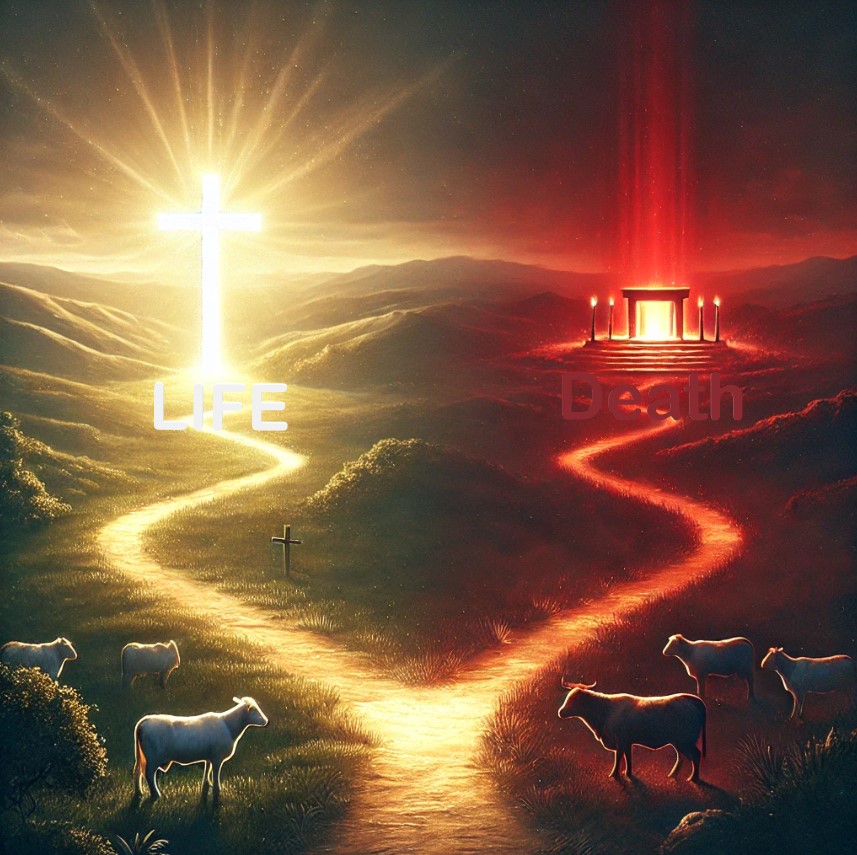
In the prophetic landscape of the Bible, few phrases are as enigmatic and debated as the “abomination that causes desolation.” This term, found in the Book of Daniel and referenced by Yeshua (Jesus) in the Gospels, has inspired numerous interpretations throughout history. Some scholars see its fulfillment in historical events, such as the desecration of the Second Temple by Antiochus IV Epiphanes, or in the destruction of the temple in AD 70 by the Romans. Others view it as a future event that will take place during the end times. However, based on my interpretation of the scriptures, I believe that the “abomination that causes desolation” refers to a future resumption of animal sacrifices by the Jewish people, which would symbolically and spiritually deny the completed, once-for-all sacrifice of Yeshua.
The Context of Daniel 9: The Everlasting Sacrifice
Daniel 9:27 speaks of a covenant being confirmed for “one week” (often understood as a seven-year period), and in the middle of this week, an event occurs that will “put an end to sacrifice and offering.” This verse also references the “abomination that causes desolation.” To understand this in light of New Testament theology, it’s crucial to recognize the significance of Yeshua’s role in fulfilling the Old Testament sacrificial system.
The Old Covenant, given through Moses, required continual burnt offerings and sacrifices to atone for the sins of Israel. These sacrifices were temporary and symbolic, pointing forward to a greater, more permanent solution for humanity’s sin problem. According to the New Testament, Yeshua is that solution. His death on the cross was the ultimate sacrifice, fulfilling the requirements of the Law and putting an end to the need for animal sacrifices. As Hebrews 10:12 states, “But this man, after he had offered one sacrifice for sins forever, sat down at the right hand of God.”
In this light, I believe that Daniel’s mention of the “continual burnt offering” being taken away refers to Yeshua Himself. He is the “continual,” the everlasting sacrifice, the Lamb of God who takes away the sins of the world (John 1:29). His sacrifice was not temporary but eternal, securing salvation for all who believe in Him. Therefore, any attempt to resume the Old Covenant sacrificial system would not only be unnecessary but also an abomination—a denial of the sufficiency of what Yeshua accomplished.
The Abomination: Resuming Animal Sacrifices
Given this understanding, the resumption of animal sacrifices by the Jewish people would be a deeply significant event. In modern times, there has been increasing interest in rebuilding the temple in Jerusalem, and some groups are actively preparing for the reintroduction of animal sacrifices. This, to me, represents a direct denial of the ultimate sacrifice of Yeshua. By returning to the Old Covenant sacrificial system, they would be rejecting the finality and power of His once-for-all atonement.
This is where I believe the “abomination that causes desolation” comes into play. The abomination is not merely a physical desecration of the temple but a spiritual one—a rejection of Yeshua as the eternal sacrifice. This act of reinstating animal sacrifices would, in effect, be saying that His sacrifice was insufficient, thereby denying the everlasting covenant He established through His death, burial, and resurrection. Such an act would indeed lead to spiritual desolation, as it would invite God’s judgment for rejecting the provision of salvation that He has given through His Son.
Yeshua as the Fulfillment of Daniel’s Prophecy
Yeshua’s words in Matthew 24:15 and Mark 13:14 directly reference Daniel’s prophecy about the “abomination of desolation.” He warns His followers that when they see this event taking place, it will signal a time of great tribulation. While many believe this refers to the Roman destruction of the temple in AD 70, I see it as having a future fulfillment as well. Just as the Roman destruction of the temple was a result of the Jewish leadership’s rejection of Yeshua, I believe that a future resumption of sacrifices will be the ultimate act of denial, triggering a period of desolation and tribulation.
It’s important to remember that Yeshua’s sacrifice did away with the need for any future sacrifices. Hebrews 9:26 says, “He has appeared once for all at the culmination of the ages to do away with sin by the sacrifice of himself.” For this reason, any return to animal sacrifices would not only be unnecessary but an affront to God’s plan for salvation. It would be a denial of the truth that Yeshua’s sacrifice is sufficient for all time, for all people.
Theological Implications
Understanding the “abomination that causes desolation” in this way carries significant theological implications. It challenges the notion that the sacrificial system of the Old Covenant has any future role in God’s redemptive plan. The resumption of sacrifices would not bring people closer to God; instead, it would signify a rejection of His ultimate provision through Yeshua.
This interpretation also emphasizes the centrality of Yeshua’s sacrifice in the fulfillment of all Old Testament prophecy. Daniel 9:24-27 speaks of bringing in “everlasting righteousness” and “putting an end to sin.” These things were accomplished by Yeshua when He died and rose again. His death was the ultimate atonement, bringing reconciliation between God and humanity. To return to animal sacrifices would be to deny that reconciliation and to attempt to go back to a system that was always meant to be temporary.
Conclusion: The True Abomination
In conclusion, the “abomination that causes desolation,” as I understand it, is the future resumption of animal sacrifices by the Jewish people, which would symbolically and spiritually deny the once-for-all sacrifice of Yeshua. This act would reject the sufficiency of His atonement and would be an abomination in God’s sight, as it would imply that the eternal, continual sacrifice of Yeshua was not enough.
Yeshua is the fulfillment of the sacrificial system, the Lamb of God who takes away the sin of the world. His death, burial, and resurrection brought an end to the need for continual burnt offerings. To reinstate them would be a rejection of the very foundation of Christian faith—the belief that Yeshua’s sacrifice was complete, perfect, and everlasting.
For this reason, I believe the resumption of animal sacrifices will be the abomination that causes desolation, denying the eternal significance of what Yeshua did and ushering in a period of spiritual desolation and tribulation. It is essential for believers to recognize the finality of Yeshua’s sacrifice and stand firm in the truth that His offering was, and will forever be, enough.
 asathief.com